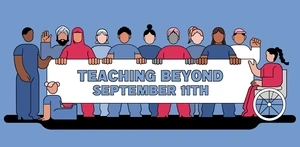
September 11, 2001—and how the events of that day continue to shape our world—can be a difficult subject for any teacher, particularly in the United States. This project provides educators with materials and pathways to explore the ongoing consequences of 9/11 through critical inquiry and a social justice lens that situates anti-Muslim rhetoric and policy within a larger historical narrative. Created by a team of educators from the University of Pennsylvania in collaboration with inter/national scholars, practitioners, and community activist leaders, we offer multiple entry points for educators working across an array of subjects to discuss Islamophobia, xenophobia, civil liberties, long-lasting wars, media and representation, and other topics. Our goal is to help students move beyond the headlines to deepen their understandings of the post-9/11 global context and continuing implications on a number of communities worldwide.
About
The events of September 11th and their aftermath have shaped global foreign policy, national security, immigration, race, and perceptions around religion and citizenship for over twenty years. But for the vast majority of young people in K-20 classrooms today, 9/11 is a day that is frozen in time. Many young people do not yet have the historical perspective or analysis to understand the tremendous changes that occurred as a result of 9/11 and subsequent related events.
The Teaching Beyond September 11th project’s 20 stand-alone modules include over 50 lessons across six themes that have been selected through a careful media analysis of global events between 2001-2021. The lesson plans have been developed by a diverse range of inter/national scholars, practitioners, and community activist leaders who are from (and/or work with) various communities impacted by 9/11 and foregrounds perspectives that are often overlooked.
This project is generously funded by the University of Pennsylvania’s Global Engagement Office with support from Penn’s Graduate School of Education and the Penn Libraries. Additional support comes from Penn’s Middle East Center and South Asia Center.
Curriculum Goals
The Teaching Beyond September 11th project helps educators supplement their courses with a wide array of materials that:
- Invite learners to critically examine the history of 9/11 to understand its ongoing consequences.
- Expose learners to the lived experiences and histories of affected communities, highlighting the interwoven histories of discrimination and race in the US and globally, and
- Draw connections between the influence of 9/11 on national security, immigration policies, race relations, and related global events.
We want students to:
- Understand the ongoing effects of the post 9/11 era, including hate violence, profiling, surveillance, and the “War on Terror”, while also recognizing that anti-Muslim racism is not a post-9/11 phenomenon and in fact has a long history.
- Analyze the multiple and continuing socio-political impacts of 9/11 domestically and globally by using one event from every year from 2001 to 2021 to explore a different issue.
- Relate anti-Muslim racism/violence with other forms of racism and violence (e.g. Black Lives Matter; xenophobia, anti-Semitism etc.) in the United States and abroad.
- Empathize with the various groups impacted by 9/11 in the United States and abroad through social justice and community-grounded perspectives highlighting how people are experiencing the effects of the post 9/11 world, while advocating, resisting, and imagining better futures.
- Identify avenues for solidarity with other groups and be motivated to act to make change.
- Take responsibility to share this knowledge with others.
How to Use
Organized across six themes, the 20-module curriculum is structured to allow for maximum flexibility and does not need to be taught sequentially. Each module is grounded in a year between 2001-2021 and contains 2-4 lessons. Lessons are designed to be taught as stand-alone 50-minute sessions but can also be used to build upon concepts and themes across class meetings. A description of each module and the lessons within it can be found below.
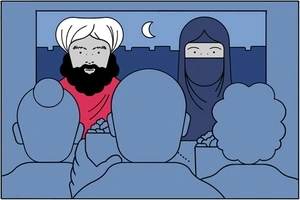
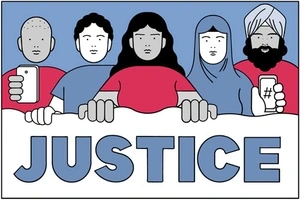
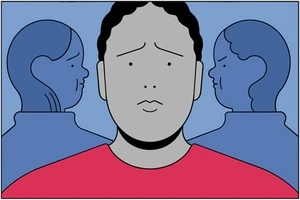
Public Opinion, Perception & Anti-Muslim Sentiment
Sensitive Content
A note to educators:
A number of the topics that this curriculum covers may be emotionally demanding for students. Some lessons will challenge students’ worldviews, while others might cause discomfort, especially for students from impacted communities. As educators, we believe that some of the best learning happens outside of one’s comfort zone; that being said, it is imperative for educators to approach these topics with sensitivity so as not to reinforce stereotypes or create tensions within groups of students or foster disinformation. Understanding who the students in your class are and the context of their lives will help prevent misunderstandings and better inform learning. We provide resources on how to introduce complex and emotionally challenging material to students and encourage educators/facilitators to look through these ideas before introducing these lessons.
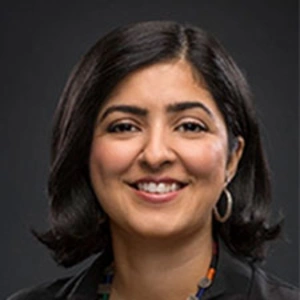
Project Team Leads
Collaborators



Research Assistants







Contact Us
Email: TeachBeyondSept11@gse.upenn.edu
Hashtag: #TeachingBeyondSept11