Faculty Expert
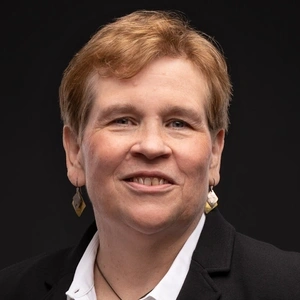
Roger Ward, GRD’09, has long viewed college athletics as a vehicle to help student-athletes maximize their educational opportunities. The provost and executive vice president of the University of Maryland, Baltimore (UMB) coached his two daughters as they traversed the competitive hoops circuit (his youngest eventually transitioned to volleyball), and he continues coaching the sport, now with former NBA player Carmelo Anthony’s Amateur Athletic Union Team Melo in Baltimore. So, he tries to help his players and other parents as they navigate college recruitment, where promises of five- and six-figure financial commitments are part of a new landscape.
“We’re a sporting family to be sure, but it’s always been the case where sports have been a means to an end,” said Ward. “None of my kids wanted to play pro, so it was always about the academics for us.”
College sports are drastically different now, thanks to a nearly $3 billion legal settlement that was formally approved in June. The House v. NCAA settlement, which marked the end of three different antitrust lawsuits that each claimed the NCAA was illegally limiting the earning power of student-athletes, now allows schools to begin paying their athletes. Many of the most prominent Division I teams in the country were already run like professional organizations, but now they need general managers to manage their team’s payroll. They have to decide which sports and athletes to spend their money on to see if they can remain competitive in a market where dollar values are eye-popping for fans.
“This is a major change in terms of how athletes receive athletic scholarships that began August 1, 2025,” said Karen Weaver, GRD’09, a national expert on the intersection of college sports and higher education who runs Penn GSE’s Collegiate Athletics for Senior Campus Leaders certificate program. “It has affected every sport, not just football. If schools ‘opt-in,’ their costs potentially go up dramatically if they want to remain competitive.”
For example, the value of a talented, returning All Conference women’s basketball player coming from one of the “Power Four” conferences that are rich in television revenue contracts—the Southeastern Conference (SEC), Big Ten, Atlantic Coast Conference (ACC), or Big 12—is estimated to be between $300,000 and $600,000. These figures often increase for returning college football players, with some of the best quarterbacks in the country reportedly making seven figures. Agents represent college athletes and help them navigate and negotiate their compensation. Athletes often sign nondisclosure agreements and are encouraged by their coaches to not tell their teammates or the media how much money they’re making. The trickle-down effect of these hefty paydays is being felt at every level of college sports.
Athletes are getting paid because of new revenue-sharing agreements made possible by the House settlement. These lofty financial promises are meant to help entice the best athletes to the Power Four conference schools, where athletic departments will have to dig deep into their own pockets to pay the athletes from their school’s revenue-sharing money. Also relatively new to collegiate athletics are name, image, and likeness (NIL) agreements, which allow athletes to profit from businesses outside their school by participating in events like camps, clinics, autograph signings, jersey sales, commercial shoots, and other opportunities.
“If the NCAA hadn’t fought so hard against the Ed O’Bannon decision, I don’t think we’d be where we are today,” said Weaver. O’Bannon is a former UCLA basketball player and part of the Bruins’ 1995 NCAA championship team. In 2014, he argued that athletes should be entitled to financial compensation for use of their NIL from videogames that featured their images. “Both sides got entrenched in their arguments and the values of preserving amateurism just accelerated the lawsuits and the challenges. Now, you’re drinking out of a firehose.”
An Uneven Playing Field
This boom time for the top college athletes, however, will not impact everyone equally. The Ivy League opted out of the House vs. NCAA settlement, meaning those schools will not participate in revenue sharing, though their athletes are allowed to pursue NIL opportunities. And certain colleges and universities—namely those in the NCAA’s Division III, which have never provided athletics scholarships—will be even further left behind now that potential student-athletes can earn not just a free ride, but also a lucrative paycheck from other schools. (Division II and Division III schools won’t be participating in revenue sharing, unless they are uniquely positioned with a Division I team in a certain sport, such as Johns Hopkins University’s lacrosse and fencing or St. Cloud State University’s men’s and women’s hockey.)

Revenue sharing has changed what college head coaches talk about when they’re recruiting prospective student-athletes. The promise of a free education is often seen as an add-in rather than the main selling point.
“For years, it was the 40-year trajectory of the Penn alumni network, the Dartmouth alumni network, the Ivy League circle of people. And that was the deal on the table that you put down. You said, ‘Nobody can top this,’” said Weaver. “Now, you have life-changing money for maybe 100 athletes. How do you turn that down? To add to the complexity, there are many Division I schools that can’t offer any revenue share, because their athletic budgets are paid for by tuition and student fees from all students. What to do then? Should fellow students pay the athletes?”
UMB’s Ward found out first-hand last spring just how complex the NCAA transfer portal—the database that facilitates student-athletes’ transfer between schools—can be. His older daughter, Destini, played basketball at Saint Francis University. Last March, the Red Flash announced they would transition from NCAA Division I to Division III. The move was the result of mounting financial pressure to try and keep pace in an era where NIL and revenue sharing are directly competing with various financial needs of every academic institution and athletic department.
The financial crunch is felt throughout college sports. More Division I schools could opt to transition to Division III in the coming years to avoid having to try and keep pace with the Power Four programs and widespread geographical conferences that will stretch travel budgets.
“If you’re talking about having to recruit student-athletes, share revenues, invest in athletic facilities, travel, and you don’t have a revenue share from a Power Four conference, you’re taking university assets, and they’re on a collision course with other important priorities for the university,” said Lawrence Ward, GRD’11, (no relation to Roger) president of University of Hartford. Hartford completed the multiyear transition from Division I to Division III in September.
What university presidents, athletic directors, and coaches know is that the best athletes will command six- and seven-figure financial commitments at Power Four institutions. Those top programs will commit the full allotment of the permitted $20.5 million per year in revenue sharing to their athletes. That revenue cap figure will increase in the coming years. That money, much of it coming from television contracts for football and basketball, can be dispersed among each school’s sports teams however those universities see fit. However, football and basketball are the main beneficiaries.
The Impact on Olympic Sports… And the Locker Room
What does that mean for nonrevenue or Olympic sports? Will there be fewer opportunities for these sports—or women’s sports—because schools could elect to save the money spent on those sports and instead put it toward further bolstering football and basketball? A recent Washington Post story followed two brothers who were recruited to dive at Division I programs only to lose their roster spot (at North Carolina State) and have their team shuttered (at the University of Virginia) amid changes brought on by the House settlement.
“We’ve been enormously successful in the Olympics because of our college-sports feeder system,” said Weaver, who was herself Olympics-bound as a field hockey player in 1980, though the U.S. boycotted the Moscow games. “We have a handful of sports that have development programs outside of college, but for the most part, we’re playing a dozen or more Olympic sports on college campuses every day. So that’s important, and that problem has to be fixed, because the United States likes to win in the Olympics, right?
“We also have to figure out what does Title IX mean in this new era?” Weaver continued, speaking about the 1972 law that was supposed to create equal athletic opportunity for women and girls. “All of the gains that we’ve seen women make, still to this day, do not put us in compliance with what the law intended.”
If Power Four schools don’t commit to the full allotment of revenue-sharing dollars per year ($20.5 million), their competitors will. If a school chooses to give one or two sports a larger piece of the revenue-sharing pie than another, that too could cause challenges.
The locker room dynamic that so many coaches fret over is now difficult to preserve when the starting quarterback might be earning thousands of dollars more than his running back or wide receivers. Weaver said rather than preserving the locker room dynamic, coaches should worry about the “parking lot dynamic.”
“On some Power Four campuses, you’re seeing Lamborghinis, Bentleys. There’s no hiding it,” Weaver said. “The wealth is there for some athletes.”
It’s also above board for these athletes to have this kind of money.
“Getting the genie back in the bottle now is going to be incredibly difficult,” said Michael Sorrell, GRD’15, president of Paul Quinn College. “I don’t know how you get the money piece back in the bottle. . . . I think we’ve entered into a space that’s just going to be really hard for people to address and regulate and navigate.”

Excerpted from the spring/summer issue of Penn GSE Magazine; read the full story in the digital version.
Media Inquiries
Penn GSE Communications is here to help reporters connect with the education experts they need.